
Williamson County Property Records
Williamson County property records cover all parcels in this southern Illinois county with a seat in Marion. The Supervisor of Assessments keeps track of assessed values, ownership data, and tax details for the entire county. You can search Williamson County property records through the county website or the GIS mapping system. Township assessors handle the hands-on work of setting values, while the Supervisor of Assessments reviews those numbers to make sure they are fair. Whether you need to look up a home value or check tax details on a parcel, this page walks you through how to find and use property records in Williamson County.
Williamson County Property Records Quick Facts
Williamson County Assessment Office
The Williamson County Supervisor of Assessments is the main office for property records in the county. It sits on the second floor of the county building on North Monroe Street in Marion. Staff there give technical help to township assessors, process exemption forms, and keep ownership records current for all parcels. Under 35 ILCS 200/, the Supervisor of Assessments must make sure that assessed values across Williamson County are uniform and at the right level. If you have a question about your assessment or need a record, this office is where you go.
Township assessors do most of the field work in Williamson County. They visit properties, review building permits, and set values for each parcel in their area. The Supervisor of Assessments then reviews those values and sends them to the Williamson County Board of Review for final check. The board hears appeals from property owners who think their value is too high. All real property in Williamson County must be assessed at 33 1/3 percent of fair market value as set by 35 ILCS 200/. Farmland follows a different method based on soil type and crop yield, which matters in a county like Williamson that has both rural land and small towns.
The Williamson County CCAO page at the Illinois Chief County Assessment Officers Association provides details on the county assessment structure and contact info. You can view it at il-ccao.org.
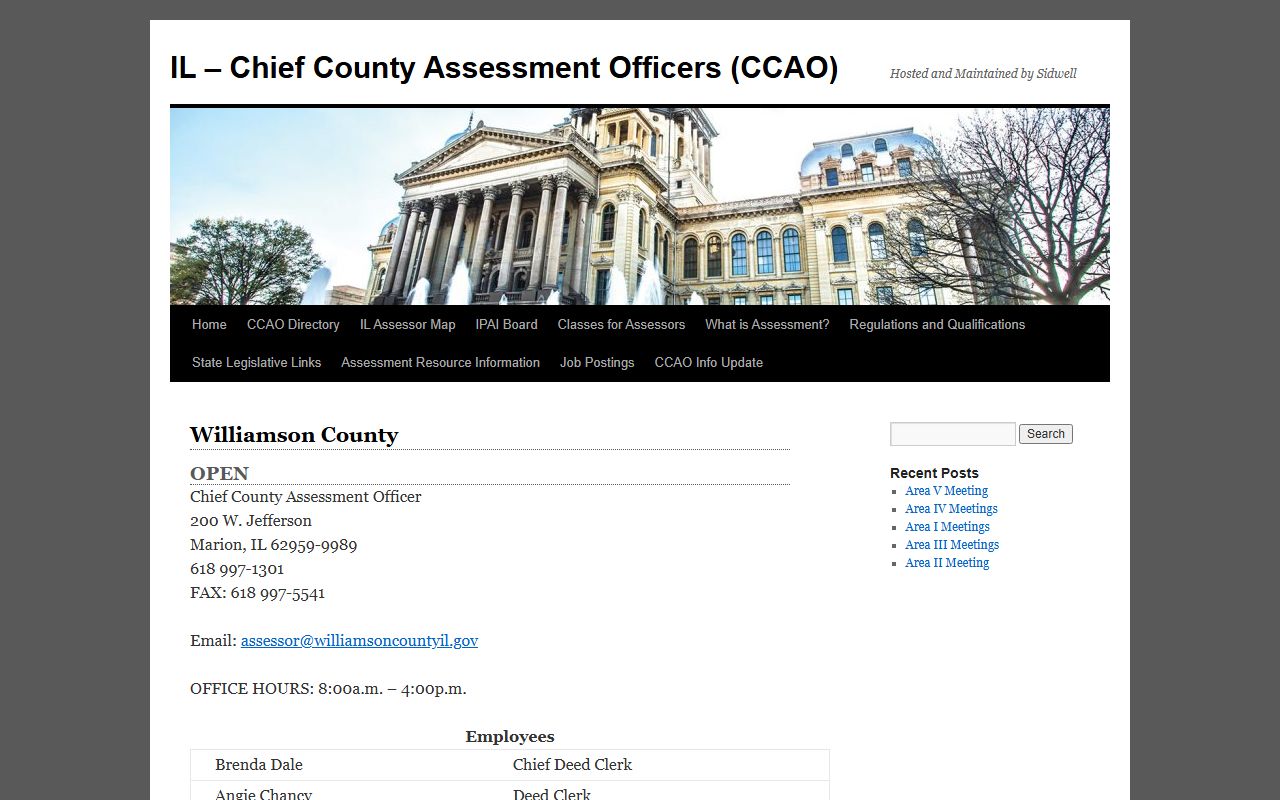
This page lists the assessment office details and gives background on how Williamson County handles property records at the local level.
| Office |
Supervisor of Assessments 407 N. Monroe Street, Suite 205 Marion, IL 62959 |
|---|---|
| Phone | (618) 998-2189 / (618) 997-1301 ext. 142 |
| Fax | (618) 997-5541 |
| Hours | Monday through Friday, 8:00 a.m. to 4:00 p.m. |
| Website | williamsoncountyil.gov |
Search Williamson County Property Records Online
Williamson County offers a couple of ways to look up property records from home. The county website links to resources through the Supervisor of Assessments page, and the Williamson County GIS system lets you search parcels on an interactive map. The GIS tool is useful if you want to see where a property sits, check lot lines, or find nearby parcels. You can click on any parcel and pull up its details right from the map.
For tax bill lookups and payment info, Williamson County connects through the statewide Illinois Property Tax Portal. Pick Williamson County from the list and the system takes you to the local tax search. You can look up parcels by address, owner name, or Property Index Number. The PIN stays with the land no matter who owns it, so it is the most reliable way to search. Your PIN shows up on your tax bill and on any assessment notice you get from Williamson County.
If you do not know your PIN, try searching by address. Type in the street number and name and the system pulls up matching records. You can also call the Supervisor of Assessments at (618) 998-2189 and staff can look it up for you over the phone. Basic lookups are free in Williamson County.
Note: The GIS map data may lag a few weeks behind the most current assessment records in Williamson County, so verify key details with the assessment office if needed.
Williamson County Property Tax Exemptions
Property owners in Williamson County can apply for exemptions that lower the tax they owe. The Supervisor of Assessments handles all exemption applications. You file them at the office on North Monroe Street in Marion. Each exemption has its own rules. The General Homestead Exemption cuts $6,000 from your assessed value if you own and live in your home. No age rule applies. This is the most common exemption you will find in Williamson County property records.
The Senior Citizens Homestead Exemption takes off an extra $5,000 for owners age 65 and up. You need to show proof of age and that you own the home. The Senior Citizens Assessment Freeze locks your assessed value so it does not rise each year, but you must meet income limits. The Disabled Persons Homestead Exemption under 35 ILCS 200/ gives a $2,000 reduction. The Disabled Veterans Homestead Exemption varies based on the disability rating. A Returning Veterans Homestead Exemption offers a one-time $5,000 cut. The Home Improvement Exemption defers increases from upgrades for up to four years. All of these show up in Williamson County property records once the office applies them to your parcel.
- General Homestead Exemption: $6,000 reduction
- Senior Citizens Homestead Exemption: $5,000 reduction
- Senior Citizens Assessment Freeze: locks assessed value
- Disabled Persons Homestead Exemption: $2,000 reduction
- Home Improvement Exemption: defers increases up to 4 years
State Resources for Williamson County Records
The Illinois Department of Revenue property tax page provides guidance that applies to all counties, including Williamson. This page explains how assessments work under 35 ILCS 200/, what exemptions are available, and how to reach local offices. The state does not manage property tax directly. As they put it, property tax is "managed by the local governments including cities, counties, and taxing districts." But their Local Government division can help if you have trouble reaching the Williamson County office.
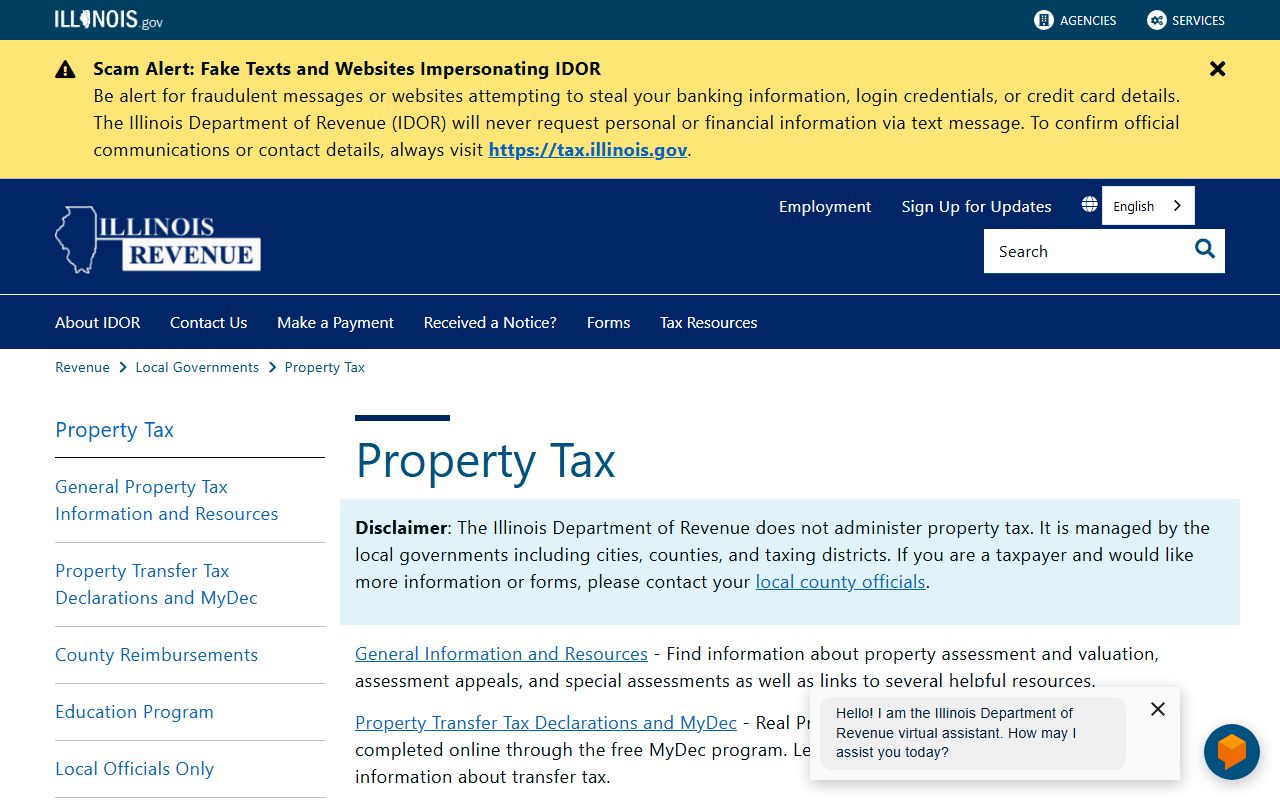
The state property tax page is a helpful backup if you need general info about how property records work in Williamson County and across Illinois.
You can reach the Local Government division at 217-785-6518 or email REV.LOCALTAX@ILLINOIS.GOV. For help finding your PIN, the County PIN Information page at the Department of Revenue lists resources for each county. Williamson County property owners can use this tool to track down their Property Index Number if it is not on their tax bill.
Getting Williamson County Property Records
You can get Williamson County property records in person at the assessment office in Marion. Walk in during business hours and staff can look up any parcel, print records, and answer questions about your assessment. Bring the property address or PIN with you. The office is at 407 N. Monroe Street, Suite 205. No appointment is needed for basic lookups.
Phone calls work too. Call (618) 998-2189 or the extension line at (618) 997-1301 ext. 142 to ask about a parcel. For tax bill questions, contact the Williamson County Treasurer. The county recorder handles deed transfers, mortgages, and liens on property. If you need to know who sold a parcel or what loans are on file, the recorder is the right office. Property taxes in Williamson County are paid in arrears, meaning the bill you pay this year covers the prior year. The lien date is January 1. If you think your assessed value is too high, you can file an appeal with the Williamson County Board of Review within 30 days of your assessment notice. Appeals are free and you do not need a lawyer to file one.
Note: Certified copies of deeds and recorded documents may cost a small fee at the Williamson County Recorder's office.
Nearby Counties
These counties border Williamson County. If you own property near a county line, check your PIN to make sure you search property records in the right county. Each county has its own assessment office and its own set of records.