
DuPage County Property Records
DuPage County property records are managed by the Supervisor of Assessments office in Wheaton. With over 930,000 residents, DuPage County is the second most populous county in Illinois and holds a large volume of property data. Township assessors across nine townships set values for each parcel, and the Supervisor of Assessments reviews those figures for the state. You can search DuPage County property records online using the county's free lookup tool, or visit the assessment office in person to get details on any parcel. The search covers assessed values, tax amounts, exemptions, and ownership info for all property in DuPage County.
DuPage County Quick Facts
DuPage County Supervisor of Assessments
The Supervisor of Assessments is the main office for property records in DuPage County. Created by state law, this office gives technical help and data to the Illinois Department of Revenue. Staff also provide advice to the nine township assessors who set values at the local level. If you have a question about your assessed value, tax bill, or exemptions, this is the place to start in DuPage County.
The office sits at 421 N. County Farm Road in Wheaton. It is open Monday through Friday from 8:00 a.m. to 4:30 p.m. You can call (630) 407-5858 for general questions about DuPage County property records. The staff handles exemption forms, reviews assessment data, and keeps the county's property rolls up to date. For the 2024 pay 2025 tax year, the office granted over 74,000 Senior Homestead Exemptions and processed almost 12,000 Senior Assessment Freeze Exemptions in DuPage County. Those are big numbers that show how active this office is.
| Office | DuPage County Supervisor of Assessments |
|---|---|
| Address | 421 N. County Farm Road, Room 1-100 Wheaton, IL 60187 |
| Phone | (630) 407-5858 / 630-407-6500 |
| Web_Email_Assessments@dupagecounty.gov | |
| Hours | Monday - Friday, 8:00 a.m. - 4:30 p.m. |
| Website | dupagecounty.gov - Supervisor of Assessments |
Note: The Supervisor of Assessments does not set individual property values but oversees the township assessors who do.
Search DuPage County Property Records Online
DuPage County runs a free property lookup tool on its website. You can search by address, owner name, or Property Index Number. The tool pulls up assessed values, tax info, and parcel details for any property in DuPage County. No account or login is needed. Just go to the site and type in what you know about the property.
The DuPage County Property Lookup portal is the best place to start your search for DuPage County property records online. It shows current and past assessed values, exemptions on file, and tax payment status for each parcel.
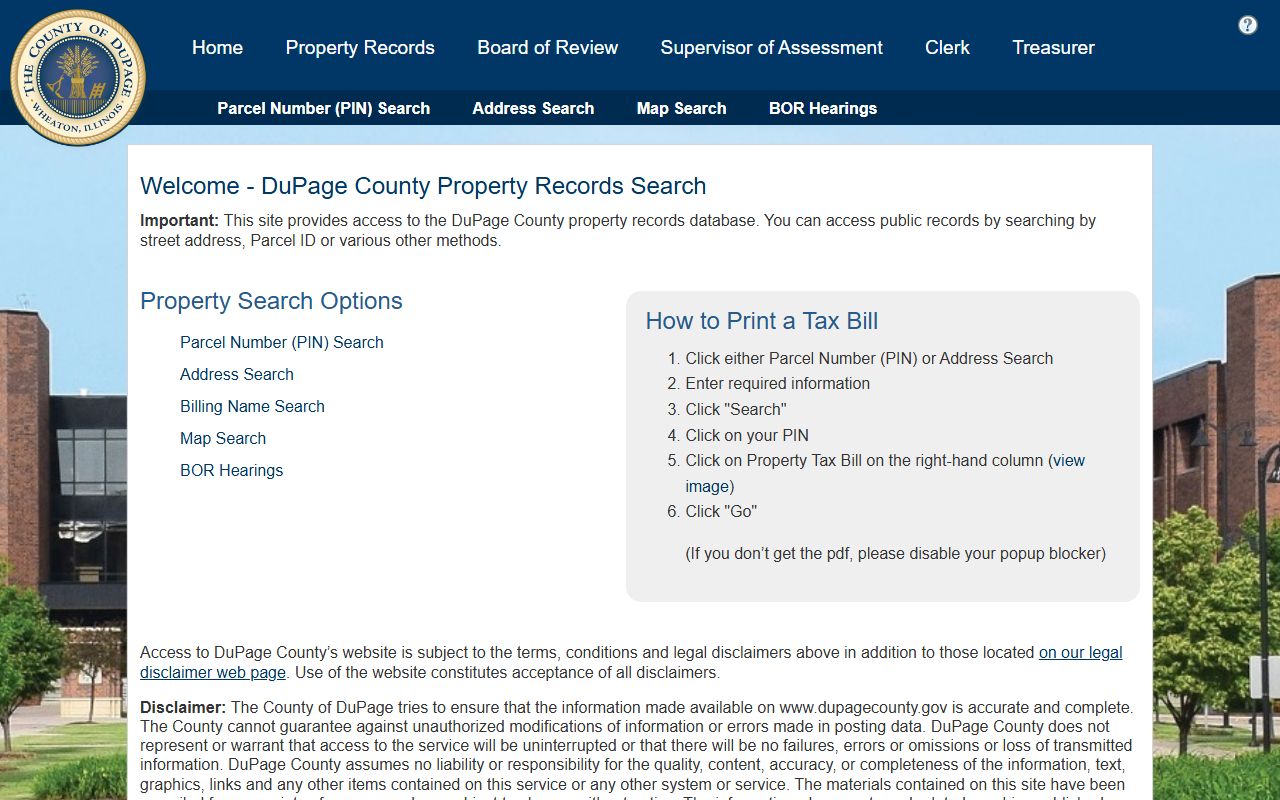
This tool lets you view full parcel data for any property in DuPage County, and you can use it from home at no cost.
Each search result shows the PIN, the township where the property sits, the assessed value, and the current tax year data. You can also see which exemptions have been applied. If a Senior Homestead or Homeowner Exemption is on the record, it shows up here. DuPage County property records through this portal go back several years, so you can track how values have changed over time. The site works well on both a computer and a phone, which makes it easy to look up records from anywhere.
DuPage County Township Assessors
Property values in DuPage County are set by township assessors. Nine townships cover the county. Each one has its own assessor who visits properties, reviews sales data, and sets the assessed value for every parcel in that area. The townships in DuPage County are Addison, Bloomingdale, Downers Grove, Lisle, Milton, Naperville, Wayne, Winfield, and York. Your township assessor is the first point of contact if you think your value is too high or too low.
Under the Illinois Property Tax Code (35 ILCS 200/), township assessors must value all real property at 33 1/3 percent of fair market value. That means if your home in DuPage County is worth $300,000 on the market, the assessed value should be around $100,000. The assessor uses recent sales, property features, and location to set each value. You can find your township assessor's contact info through the DuPage County Township Assessor Directory.
The Supervisor of Assessments checks the work of all nine township assessors. If values in one township are too high or too low compared to sales data, the Supervisor can apply a multiplier to bring them in line. This process helps keep DuPage County property records fair and consistent across the board. The Illinois Department of Revenue also reviews county data each year to make sure the 33 1/3 percent standard holds.
Property Tax Exemptions in DuPage County
DuPage County property records show which exemptions apply to each parcel. Exemptions lower the taxable value of your home. You apply through the Supervisor of Assessments office or your township assessor. Several types are available under Illinois law, and DuPage County processes tens of thousands of them each year.
The General Homestead Exemption cuts $6,000 from the assessed value of your home. You must own and live in the property to qualify. This is the most common exemption in DuPage County property records. The Senior Citizens Homestead Exemption gives an extra $5,000 off for homeowners age 65 and older. For the 2024 pay 2025 tax year, DuPage County granted over 74,000 of these. That gives you an idea of how many seniors live in DuPage County and take advantage of this break.
The Senior Citizens Assessment Freeze is different from the regular senior exemption. It locks your assessed value so it does not go up from year to year, even if the market rises. You must meet income limits to qualify. DuPage County processed almost 12,000 of these freeze exemptions for the 2024 pay 2025 cycle. Other exemptions in DuPage County include the Disabled Persons Homestead Exemption ($2,000 reduction), the Disabled Veterans Homestead Exemption (varies by disability rating), and the Home Improvement Exemption, which defers increases from certain upgrades for up to four years as set out in 35 ILCS 200/. All of these show up in DuPage County property records once they are approved.
Note: Exemption forms are due by specific deadlines each year, and late applications may not be processed until the next tax cycle.
How DuPage County Assessments Work
The assessment process in DuPage County follows a set timeline. The lien date is January 1 each year. That is the date the county uses to figure out who owns the property and what it is worth. Township assessors then review values over the next several months. They look at recent sales, building permits, and property changes to update their records for DuPage County.
Illinois uses a quadrennial assessment cycle for most counties, meaning a full reassessment happens every four years. DuPage County falls under this schedule. In the years between full reassessments, township assessors still adjust values based on market trends. Assessment notices go out in the summer or fall. You get about 30 days to file an appeal with the DuPage County Board of Review if you disagree with your value. The Board of Review is a separate body that hears complaints and can change assessed values in DuPage County.
After the Board of Review finishes its work, the Supervisor of Assessments sends the final numbers to the County Clerk. The Clerk uses those values, along with local tax rates, to calculate your tax bill. Tax bills in DuPage County go out the following year, since Illinois property taxes are paid in arrears. So the bill you pay in 2025 covers the 2024 assessment year. This is standard across all of Illinois under 35 ILCS 200/.
What DuPage County Property Records Show
Property records in DuPage County contain a lot of data. Each record ties to a PIN that stays with the parcel no matter who owns it. The PIN is your key piece of info when you search for records in DuPage County. You can find it on your tax bill, assessment notice, or deed.
A typical DuPage County property record includes the owner name and mailing address, the PIN, the assessed value at 33 1/3 percent of fair market value, and the total tax amount due. It also lists the legal description of the parcel, lot size, and what type of structure sits on the land. If any exemptions are in place, those show on the record too. DuPage County property records also track the township, the tax code area, and the various taxing districts that affect the final bill. Schools, park districts, library districts, fire protection districts, and the county itself all set their own rates. The record breaks down how much goes to each one. This level of detail helps you see exactly where your tax dollars go in DuPage County.
The Illinois Department of Revenue property tax page has more background on how the system works statewide and how DuPage County fits into the broader picture.
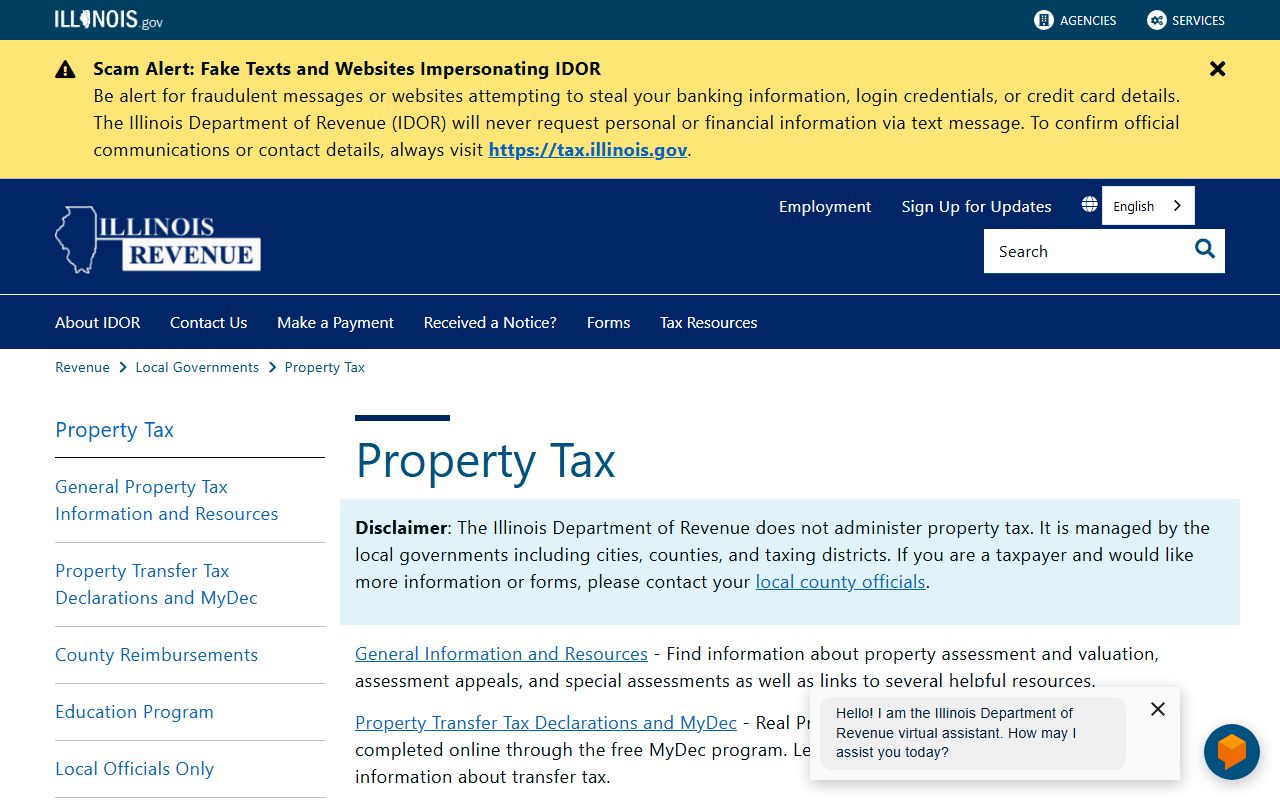
This state resource explains the roles of township assessors, county offices, and the Department of Revenue in maintaining property records across Illinois.
DuPage County Property Assessment Appeals
If you think your assessed value is wrong, you can file an appeal. DuPage County has a Board of Review that handles these complaints. The process starts with getting your assessment notice, which the township assessor mails out each year. Check the value listed on it. If it looks too high, compare it to recent sales of similar homes in your area of DuPage County.
You file your appeal with the DuPage County Board of Review during the open filing period. The board reviews your evidence, which can include sale prices of comparable properties, photos, and any other facts that support a lower value. A hearing may be scheduled. The board can raise, lower, or keep the same value. Under 35 ILCS 200/, the board must act on all complaints before it certifies the final assessment roll for DuPage County.
If you still disagree after the Board of Review rules, you have two more options. You can appeal to the Illinois Property Tax Appeal Board, which is a state-level body. Or you can file a case in circuit court. Most people stop at the county level, but the state board sees thousands of cases from across Illinois each year, and DuPage County is one of the top sources of those appeals.
Note: Keep copies of all documents you submit during the appeal, as you may need them for future tax years in DuPage County.
Get DuPage County Records In Person
You can visit the Supervisor of Assessments office to get property records in DuPage County. The office is at 421 N. County Farm Road, Room 1-100, in Wheaton. Staff can look up any parcel and print records for you. Bring the address or PIN of the property you want. No appointment is needed.
Hours are Monday through Friday, 8:00 a.m. to 4:30 p.m. You can also call 630-407-6500 to ask questions over the phone. Staff can help with exemption forms, explain your assessment, and point you to the right township assessor if you need to talk about your value. Email is another option at Web_Email_Assessments@dupagecounty.gov. The DuPage County Supervisor of Assessments office is helpful and can walk you through the process of reading and understanding your property records.
DuPage County Property Record Resources
Several other DuPage County offices deal with property records and related data. The DuPage County Recorder keeps deeds, mortgages, and other documents that affect property ownership. If you need to trace who owned a parcel over time, the Recorder's office is where to go. The County Clerk's office calculates tax rates and produces the final tax bills based on assessed values from the Supervisor of Assessments.
The DuPage County Treasurer collects property tax payments and can tell you if a bill has been paid or if there is a balance due. Tax sale information also comes from the Treasurer's office. These offices work together to maintain the full picture of DuPage County property records from assessment through billing and payment.
- DuPage County Recorder: deeds, liens, and title documents
- DuPage County Clerk: tax rate calculations and extensions
- DuPage County Treasurer: tax payments, balances, and sales
- DuPage County Board of Review: assessment appeals and complaints
- Township Assessors: individual property valuations
The Illinois County PIN Information page at tax.illinois.gov can also help you find your Property Index Number if you are searching DuPage County property records for the first time and are not sure what PIN to use.
Cities in DuPage County
DuPage County has many cities and villages. Property records for all of them are handled at the county and township level, not by city offices. Below are the major cities in DuPage County that have their own pages with more local details about where to find property records.
Other communities in DuPage County include Elmhurst, Lombard, Glen Ellyn, Carol Stream, Addison, Villa Park, Woodridge, and Lisle. All of these use the DuPage County Supervisor of Assessments and their local township assessor for property records.
Nearby Counties
These counties border DuPage County. If a property sits near the county line, make sure you know which county it falls in before searching for records. Each county in Illinois keeps its own property data.