
Clay County Property Records
Clay County property records are managed by the Supervisor of Assessments in Louisville, the county seat. The office tracks assessed values, ownership data, and exemption filings for all parcels across the county. Township assessors handle the fieldwork and set initial values for land and buildings. The county office then checks those numbers for accuracy and fairness. Clay County is a small, mostly rural county in southeastern Illinois. If you need to look up an assessed value, find out who owns a parcel, or get tax details, this page covers the tools and contacts for Clay County property records.
Clay County Property Records Quick Facts
Clay County Assessment Office
Kindal Eastin serves as the Supervisor of Assessments for Clay County. The office mailing address is PO Box 178, Louisville, IL 62858. This is the main hub for property records in the county. Staff here keep track of assessed values for every parcel, process exemption applications, and support township assessors who set values at the local level. Under 35 ILCS 200/, the Supervisor of Assessments must verify that all township values are uniform. If one township seems off compared to the rest, the office can step in and make corrections so Clay County property records stay fair for all owners.
Township assessors in Clay County do the day-to-day field work. They check new construction, review permits, and visit properties when needed to set values. The assessment date is January 1 each year. All real property in Clay County gets assessed at 33 1/3 percent of fair market value, which is the standard across most of Illinois. After the township assessors complete their work, Kindal Eastin's office reviews the figures to confirm they are consistent across the county. The Board of Review then hears appeals from owners who believe their assessed value is too high or that a mistake was made.
The Clay County Supervisor of Assessments page has contact info and general details about how assessments work in the county.
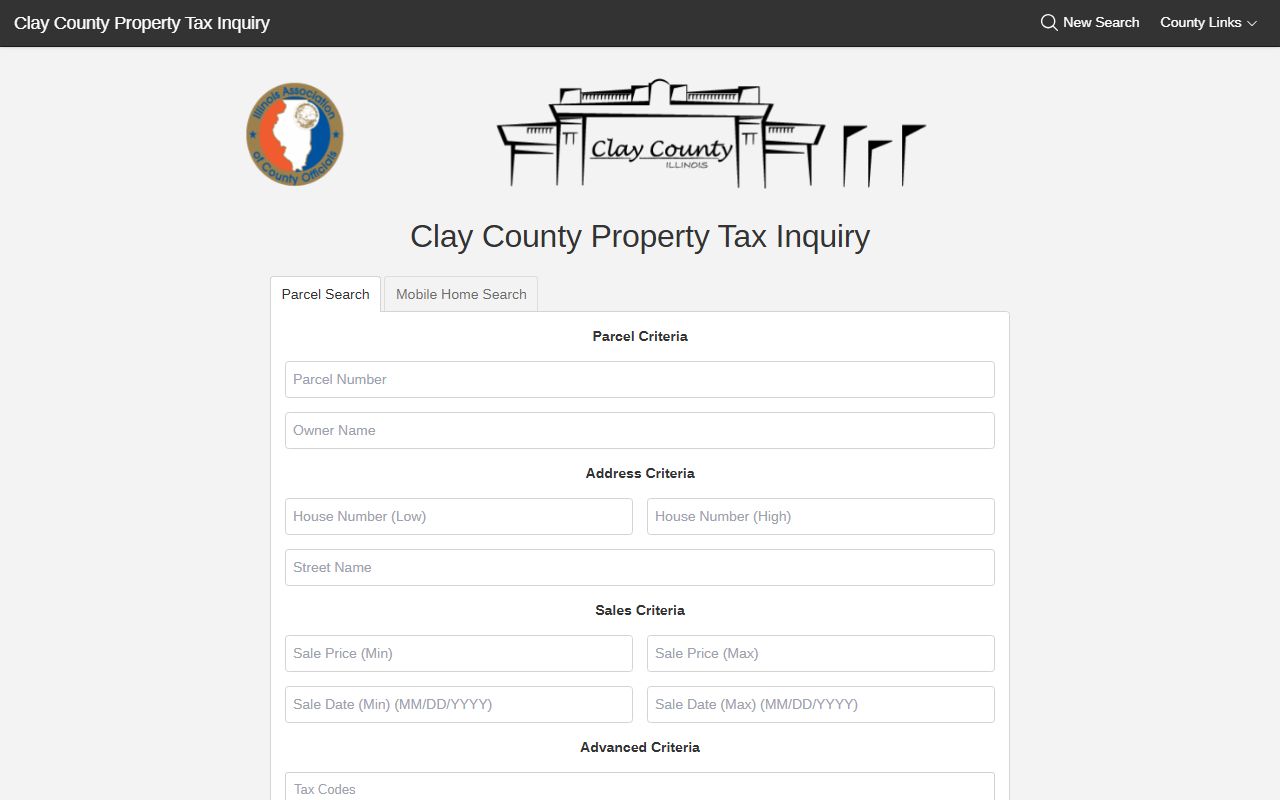
This page is the starting point for anyone working with Clay County property records or looking to get in touch with the assessment office in Louisville.
| Office | Clay County Supervisor of Assessments |
|---|---|
| Officer | Kindal Eastin |
| Address | PO Box 178, Louisville, IL 62858 |
| Phone | (618) 665-3370 |
| Fax | (618) 665-3158 |
| assess13@wabash.net | |
| Website | claycountyillinois.org/supervisor-of-assessment |
Search Clay County Property Records Online
Clay County offers a free online property search through the DevNet Wedge platform at clayil.devnetwedge.com. You can search parcels by address, owner name, or Property Index Number. The PIN is a code that stays tied to the land no matter who buys or sells it. Most people start with an address search since that is what they know right away. Results pull up the assessed value, fair market value, lot size, and property class for each parcel in Clay County. No account or login is needed and the tool is open to anyone.
Under 35 ILCS 200/, all property in Clay County must be assessed at 33 1/3 percent of fair market value. The online search reflects that figure along with any exemptions on the parcel. You can also see which township a property falls in and the class code that shows if the land is farm, residential, or commercial. This is the quickest way to pull up Clay County property records without a drive to Louisville. The search runs at all hours, so you can check records whenever it fits your schedule.
The Illinois Department of Revenue property tax page provides guidance that applies to all counties, including Clay County.
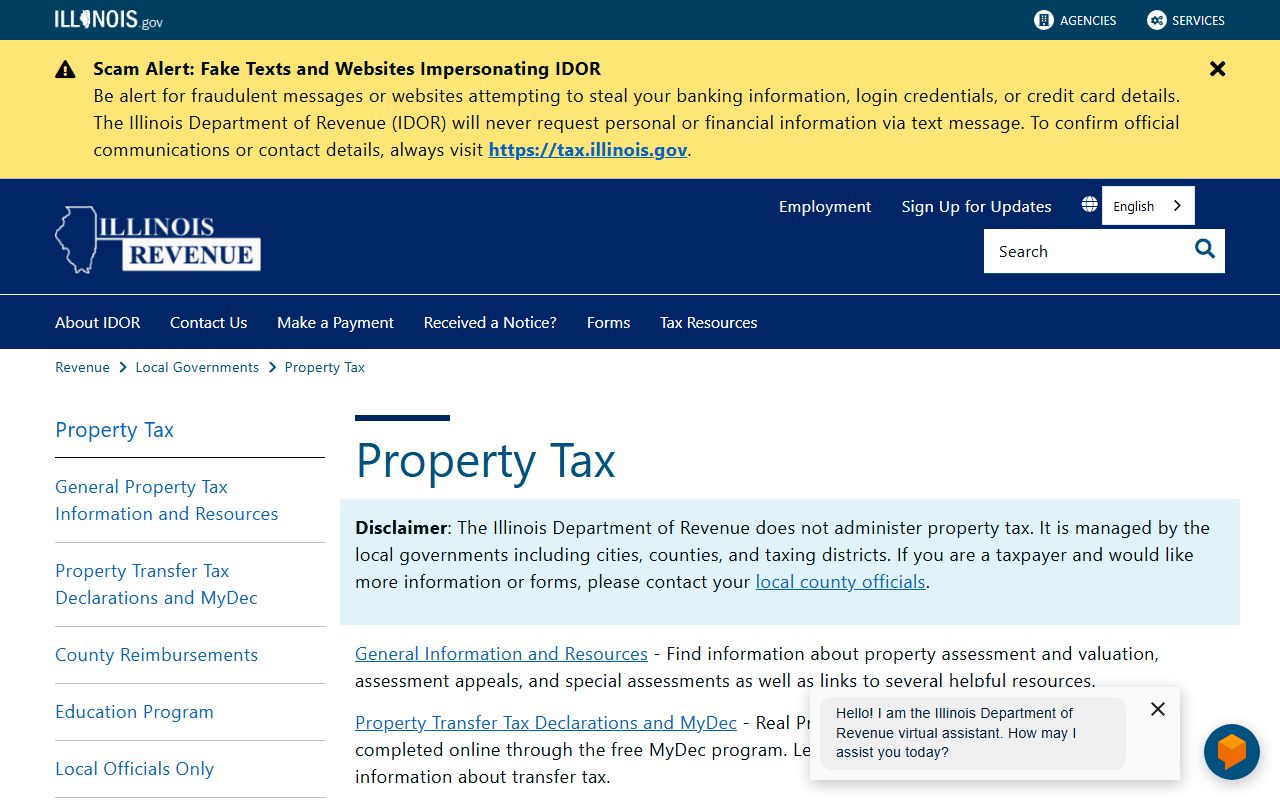
The state page covers assessment standards, exemption rules, and other details that affect how Clay County property records are handled.
The statewide Illinois Property Tax Portal is another way to reach Clay County records. Pick the county from the list and it links you to the local tax inquiry system. Between these two tools, most searches for Clay County property records can be done from home without a visit to Louisville.
Clay County Property Tax Records
Property taxes in Clay County are paid in arrears. The bill you pay this year covers the prior year's assessment. Under 35 ILCS 200/, the lien date is January 1. That date sets who owns the parcel and what it is worth for tax purposes. Tax bills split the total owed among each taxing district that covers the parcel. Schools, the county, road districts, and local municipalities in Clay County all get a share of the bill. The rate depends on where the parcel sits within the county.
A parcel in Louisville may carry a different total tax rate than one in a rural township. That gap comes from the mix of taxing bodies that overlap each area. Knowing how those rates work helps when you read your Clay County property records. The assessor sets the value. The County Treasurer collects the tax. If you have questions about how much you owe or when a payment is due, the Treasurer handles that side. For questions about the assessed value, the Supervisor of Assessments office in Louisville is where to call.
Clay County tax bills typically go out in the spring with two installment due dates later in the year.
Clay County Property Exemptions
Property owners in Clay County can apply for exemptions that lower their tax bill. All forms go through the assessment office in Louisville. The General Homestead Exemption cuts $6,000 from your assessed value if you own and live in your home. No age limit applies. This is the most common exemption you will find in Clay County property records.
Homeowners age 65 and up can also get the Senior Citizens Homestead Exemption for an extra $5,000 off. The Senior Citizens Assessment Freeze locks your assessed value so it does not climb each year, but income limits apply. A Disabled Persons Homestead Exemption gives a $2,000 cut under 35 ILCS 200/. Veterans with a service-connected disability may qualify for the Disabled Veterans Homestead Exemption, where the amount depends on the VA rating. The Home Improvement Exemption defers increases from upgrades for up to four years. Once the office approves an exemption, it shows up in your Clay County property records and stays on file unless your status changes.
- General Homestead Exemption: $6,000 reduction
- Senior Citizens Homestead Exemption: $5,000 (age 65+)
- Senior Citizens Assessment Freeze: locks value in place
- Disabled Persons Homestead Exemption: $2,000 reduction
- Disabled Veterans Homestead Exemption: varies by rating
- Home Improvement Exemption: defers increases up to 4 years
State Resources for Clay County
The County PIN Information page at the Illinois Department of Revenue helps you find your Property Index Number if you do not have it. Your PIN shows up on tax bills and assessment notices. It is the most reliable key for searching Clay County property records. If you lost your tax bill or never got one, the PIN lookup can help you track down your parcel quickly.
For state-level help with property tax questions, call 1-800-732-8866 or email REV.LOCALTAX@ILLINOIS.GOV. The Illinois Department of Revenue contact page lists more ways to get in touch. Clay County residents who need general help with how property tax works in Illinois can start with these state resources.
Get Clay County Records in Person
Contact the assessment office in Louisville during regular hours. Bring the address or PIN of the property you want to check. Staff can look up the full record, answer questions about your assessment, and help with exemption forms. No appointment is needed. Clay County property records are public. Anyone can ask to see them.
Phone help works too. Call (618) 665-3370 and staff can pull up basic data for you over the phone. You can also fax requests to (618) 665-3158 or send an email to assess13@wabash.net. For quick lookups, the online search at clayil.devnetwedge.com is faster than a trip to the courthouse. But if you need to file an exemption form, ask about an appeal, or deal with something that needs a signature, calling or visiting in person is the best choice.
Nearby Counties
These counties border Clay County. Property records belong to the county where the parcel is located. If a property sits near a county line, double check the address before you search the wrong system.