
Chicago Property Records
Chicago property records are managed by the Cook County Assessor's Office, not the City of Chicago. All property assessments, tax appeals, and parcel data for Chicago go through Cook County. You can search Chicago property records online using the free Cook County property search portal. Whether you need to check an assessed value, find who owns a parcel, or look up tax details, this page covers the tools and contacts for Chicago property records. The Cook County system uses a triennial assessment cycle, which sets Chicago apart from the rest of Illinois.
Chicago Property Records Quick Facts
Chicago Property Assessment Office
Fritz Kaegi serves as the Cook County Assessor. His office handles all property records for Chicago. The main office sits at 118 N. Clark Street, Room 320, Chicago, IL 60602. Staff here set assessed values for every parcel in the city. They also process exemption forms and handle appeals. Under 35 ILCS 200/, all property in Chicago must be assessed at 33 1/3 percent of fair market value. But Cook County is unique. It uses a triennial cycle instead of the quadrennial cycle most Illinois counties follow.
The triennial cycle means Chicago property records get reassessed every three years. The city is split into three areas, and each area gets reassessed on a rotating basis. This is different from the rest of Illinois where counties reassess every four years. When your area comes up for reassessment, you will get a notice in the mail showing your new assessed value. If you think the number is wrong, you can file an appeal with the Cook County Assessor's Office or later with the Board of Review.
The Cook County Assessor website is the main portal for Chicago property records and assessment info.
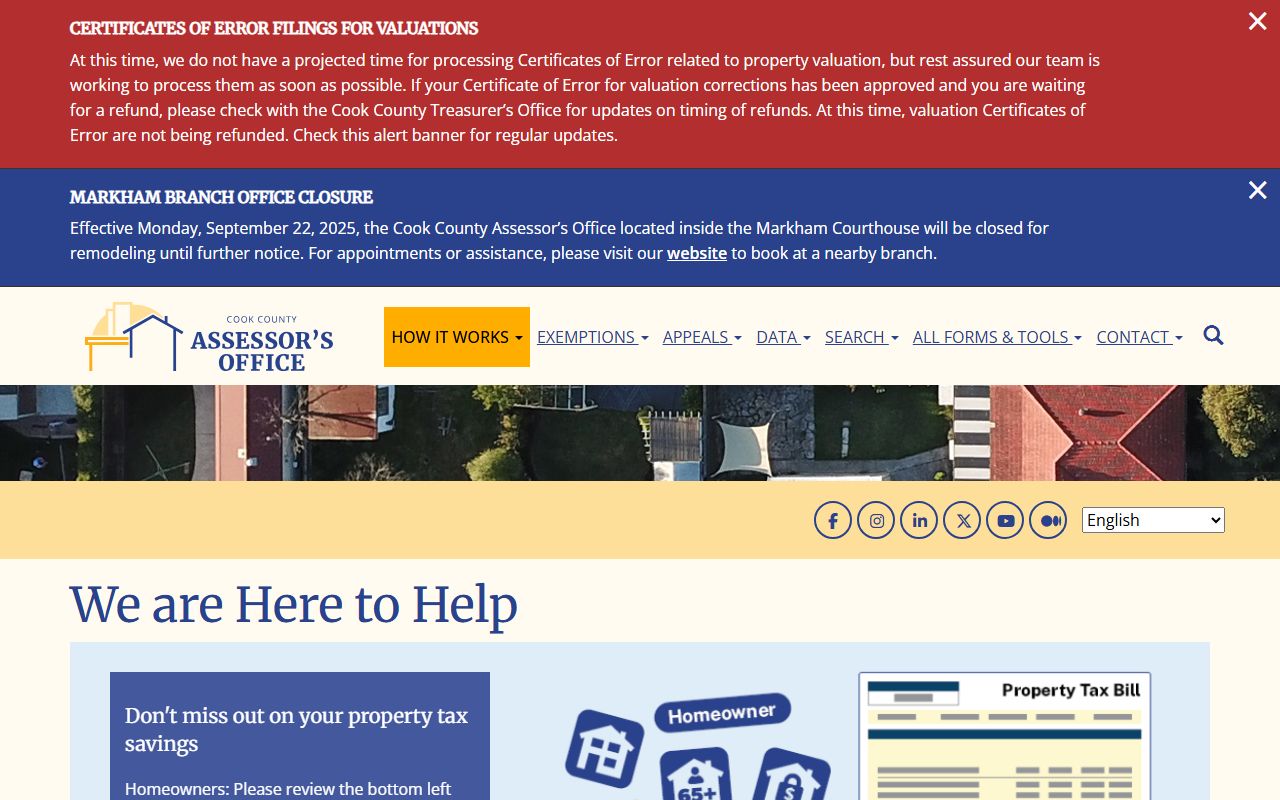
Start here to find forms, check your assessment, or reach the office that handles all Chicago property records.
| Office | Cook County Assessor's Office |
|---|---|
| Assessor | Fritz Kaegi |
| Address | 118 N. Clark Street, Room 320, Chicago, IL 60602 |
| Phone | (312) 443-7550 |
| assessor@cookcountyil.gov | |
| Website | cookcountyassessoril.gov |
Search Chicago Property Records Online
The Cook County Property Info portal is the main tool for searching Chicago property records online. You can look up any parcel by address, owner name, or Property Index Number. The PIN is a 14-digit code tied to each piece of land. It stays the same no matter who buys or sells the property. Most people start with an address search. Results show the assessed value, fair market value, tax amount, and property class.
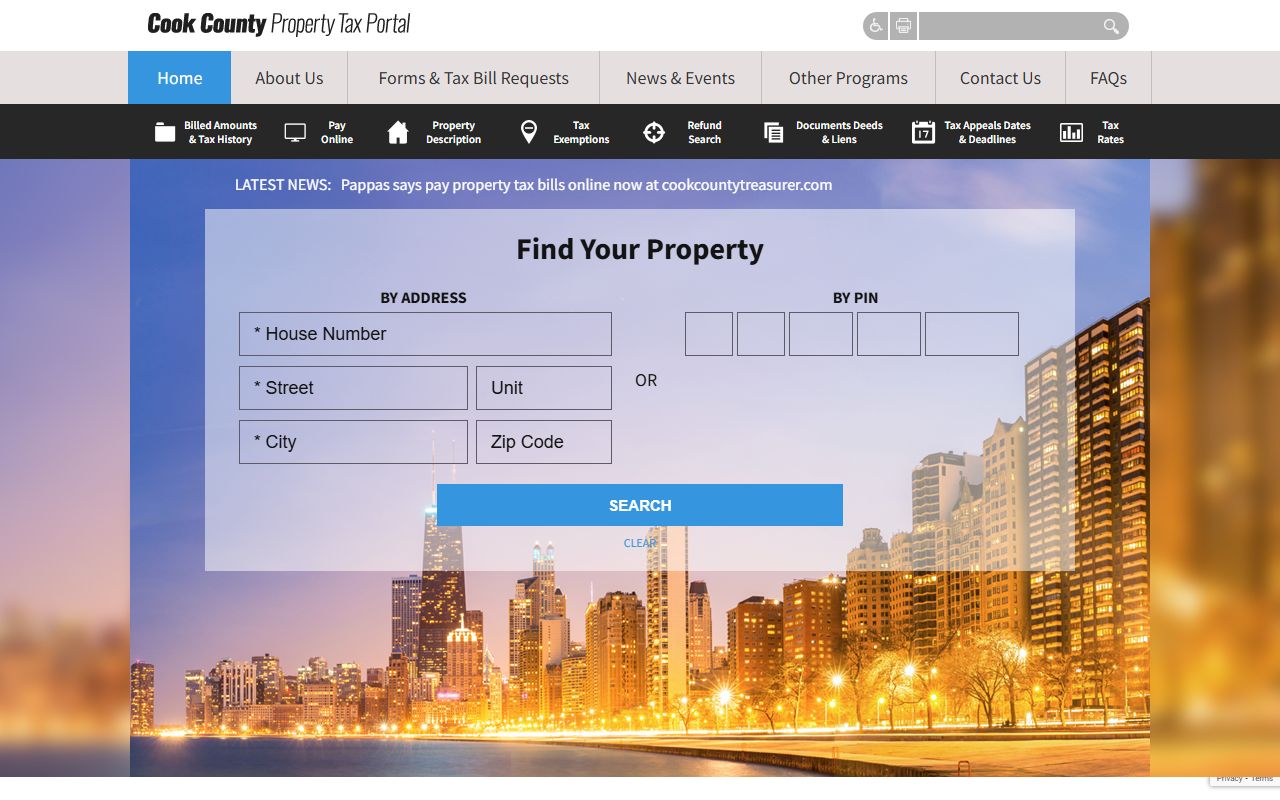
This free tool pulls up full parcel data for any property in Chicago. No login needed.
The search covers all of Cook County, not just Chicago. So if you are looking at a property near the city border, you can check it here too. Under 35 ILCS 200/, all property must be assessed at 33 1/3 percent of fair market value. The portal shows that assessed value along with any exemptions on file. You can also see the tax history, sales history, and the legal description of the parcel. This is the fastest way to pull up Chicago property records from home.
Note: If you do not know your PIN, the address search will find it for you.
Chicago Property Tax Records
Property taxes in Chicago are paid in arrears. The bill you get this year covers last year's assessment. The Cook County Treasurer sends out the bills and collects payment. The Assessor sets the value. The Treasurer handles the money. Those are two different offices. If you think your value is wrong, contact the Assessor. If you have a question about your bill or payment, call the Treasurer.
Chicago has some of the highest property tax rates in Illinois. The total rate depends on which taxing districts overlap your parcel. Schools take the biggest share. The city, county, park district, and other local bodies each add a piece. Two homes on the same block can have different rates if they sit in different school or park districts. Understanding how those rates stack up helps when reading your Chicago property records.
The lien date under 35 ILCS 200/ is January 1 each year. That date sets who owns the parcel and what it is worth for tax purposes. Tax bills in Cook County usually come out later than in most other Illinois counties. First installment is often due in March, with the second installment following in the summer or fall.
Chicago Property Tax Exemptions
Chicago property owners can apply for exemptions that lower their tax bill. All forms go through the Cook County Assessor's Office. The General Homestead Exemption cuts $10,000 from your assessed value if you own and live in your home. Cook County gets a higher amount than the rest of the state. This is the most common exemption you will find in Chicago property records.
Owners age 65 and up can get the Senior Citizens Homestead Exemption for an extra $8,000 off. The Senior Citizens Assessment Freeze locks your assessed value if you meet income limits. The Long-time Occupant Homestead Exemption helps people who have lived in their home for at least 10 years and are in areas where values have jumped. Cook County also offers the Returning Veterans Homestead Exemption, which gives a one-time $5,000 break.
- General Homestead Exemption: $10,000 reduction (Cook County)
- Senior Citizens Homestead Exemption: $8,000 (age 65+)
- Senior Citizens Assessment Freeze: locks value in place
- Disabled Persons Homestead Exemption: $2,000 reduction
- Disabled Veterans Homestead Exemption: varies by VA rating
- Long-time Occupant Homestead Exemption: for 10+ year residents
Appeal Chicago Property Assessments
If you think your Chicago property records show a value that is too high, you can file an appeal. The first step is to appeal to the Cook County Assessor during the open appeal window for your township. Chicago is split into several townships for assessment purposes. Each one has its own appeal period. Check the Assessor's website for the current schedule.
If the Assessor does not change your value, you can take it to the Cook County Board of Review. That is a separate office that hears appeals after the Assessor has made a decision. You can file online or in person. Bring comparable sales data to support your case. The Board of Review looks at what similar homes in your area have sold for and decides if your assessed value is fair. This process is free. You do not need a lawyer, though some owners hire one.
Chicago Building Records
The Cook County Department of Building and Zoning handles building permits for the county. You can reach them at 312-603-0500 or by email at intake.bnz@cookcountyil.gov. Building permits can affect your Chicago property records because new construction or major renovations may change your assessed value. When you pull a permit, the Assessor's office will eventually update the property record to reflect the improvement.
The Illinois Department of Revenue property tax page provides statewide guidance that applies to Chicago. The department does not manage property tax directly. It sets rules while local offices handle the work. For state-level help, call 1-800-732-8866.
Cook County Property Records
All Chicago property records are part of the Cook County system. The county covers Chicago plus dozens of suburban communities. If you are looking at property anywhere in Cook County, the same tools and offices apply. Visit our Cook County property records page for more details about the county-level assessment process, office locations, and search tools that cover all of Cook County.
Nearby Cities
These cities are near Chicago. Property records for each city go through their own county assessment office.